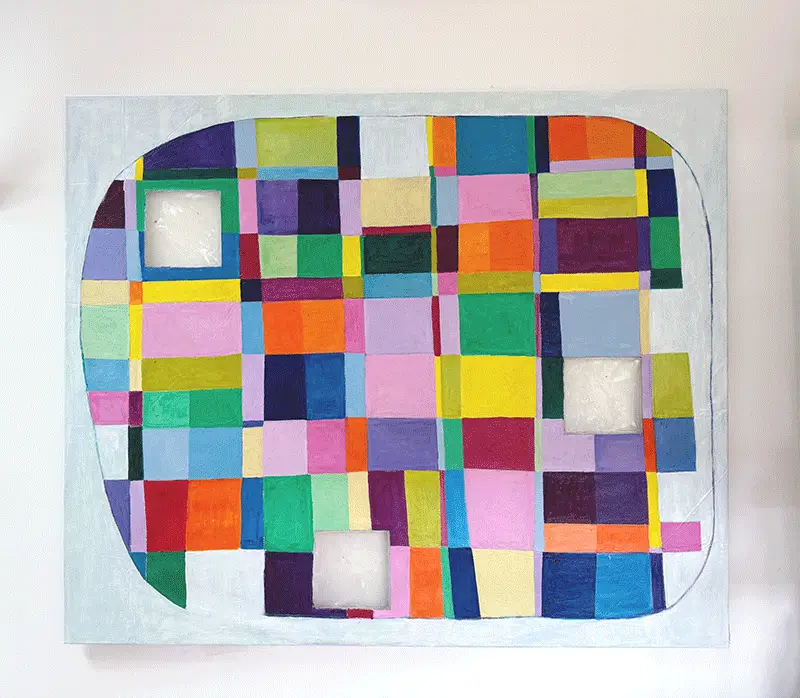
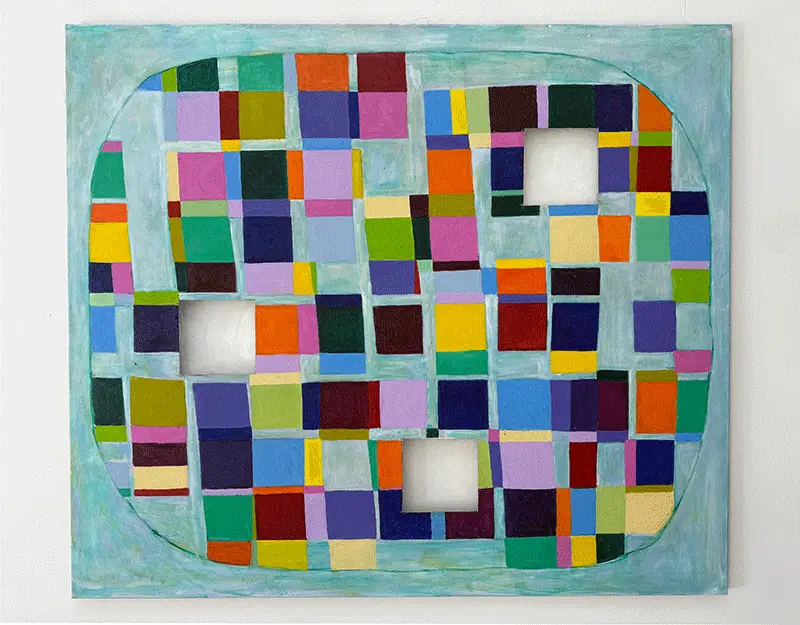
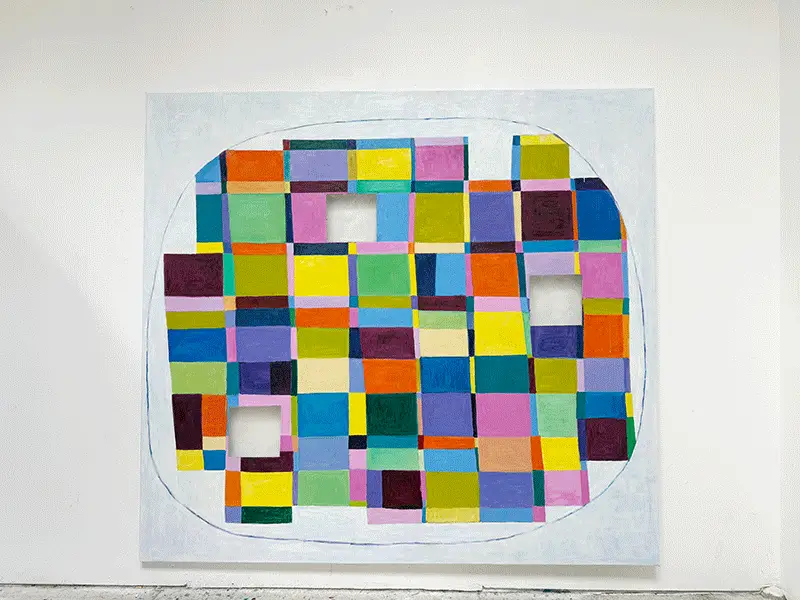
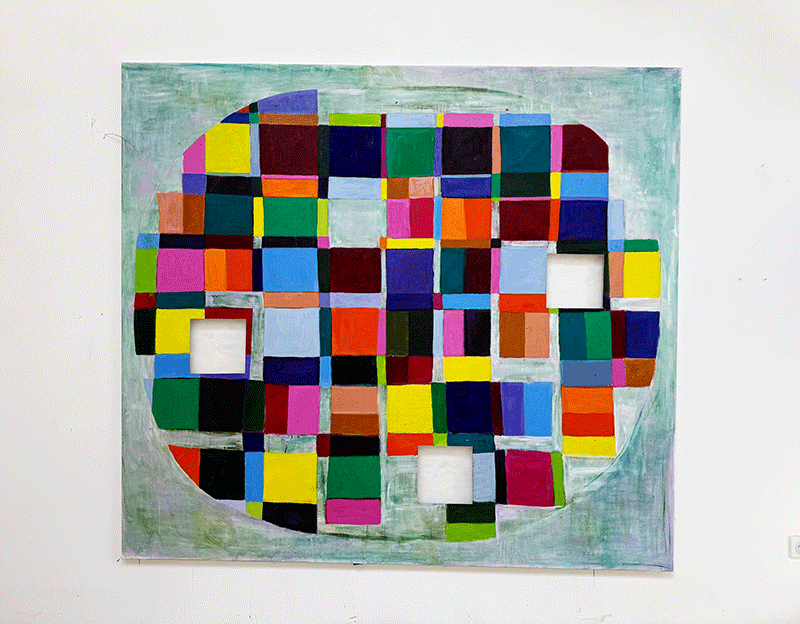
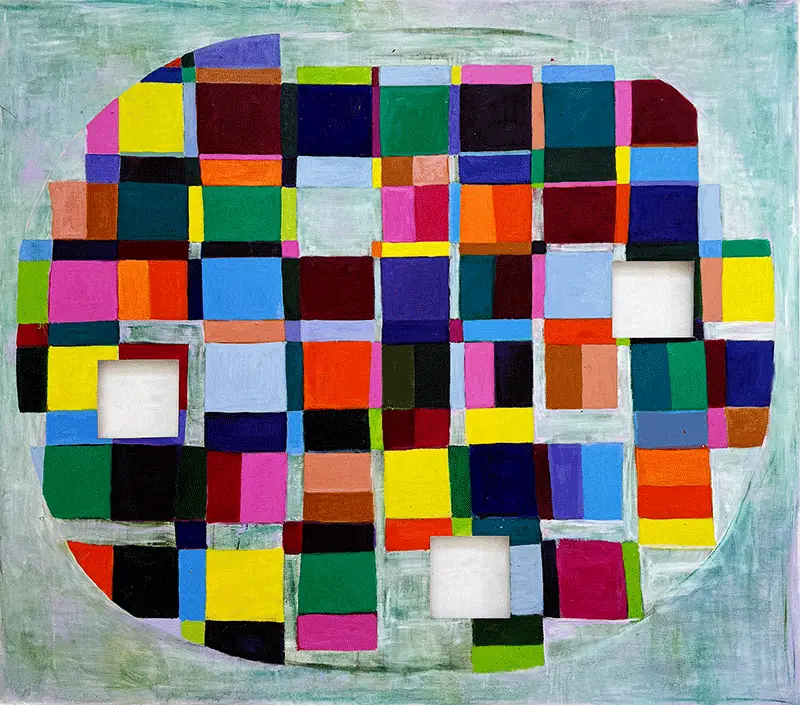
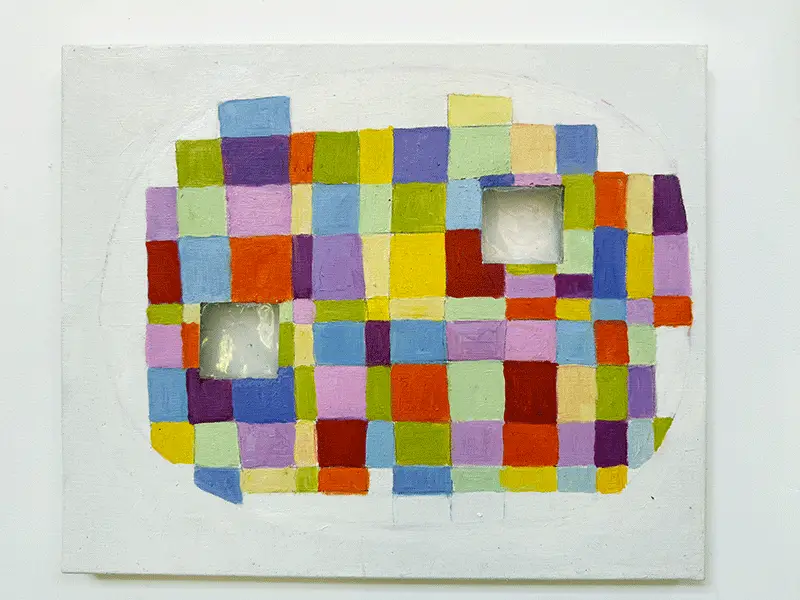
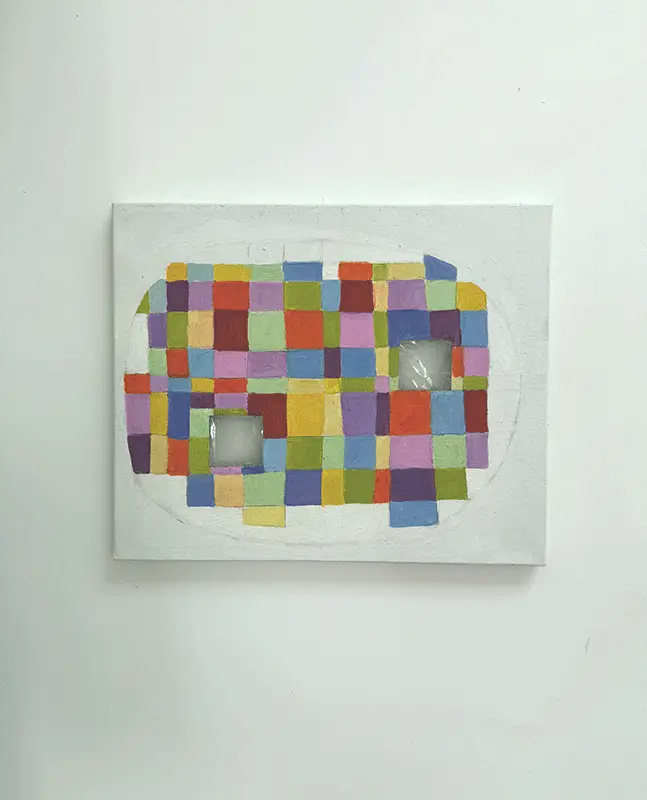
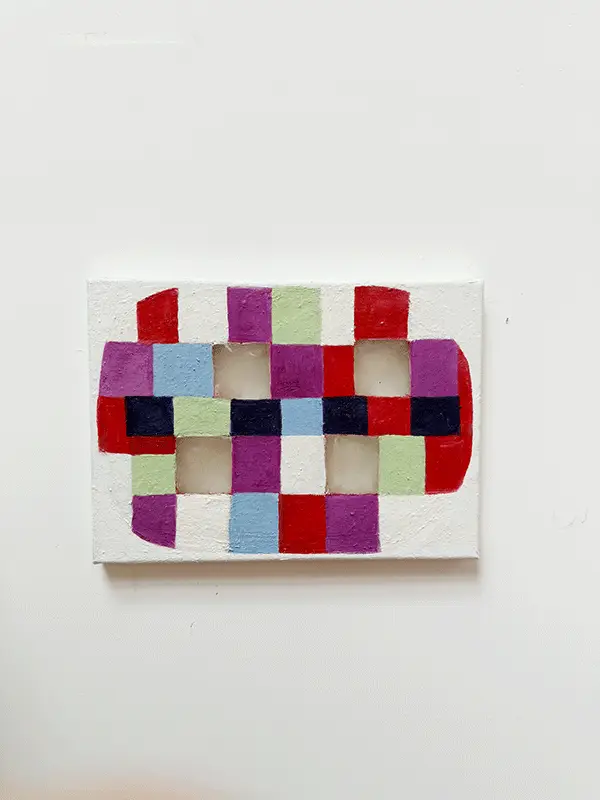
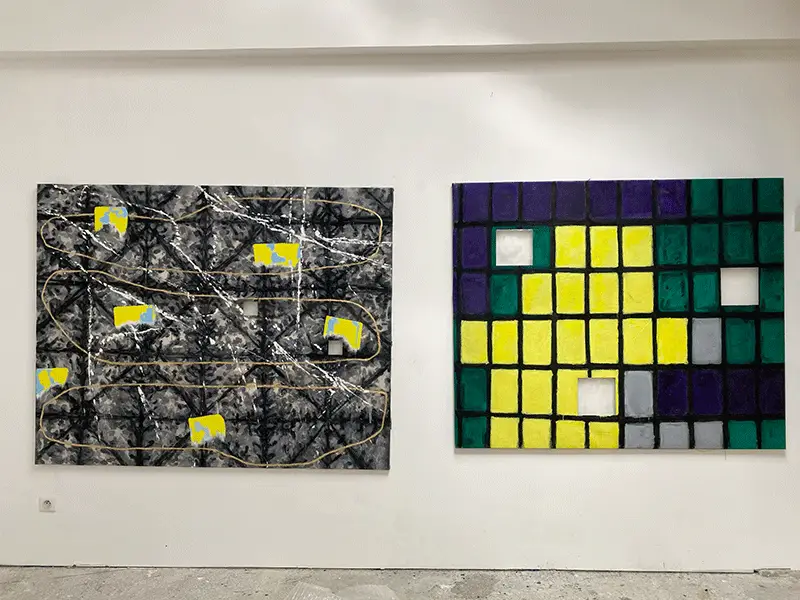
D-Composition (2021 - 2026)
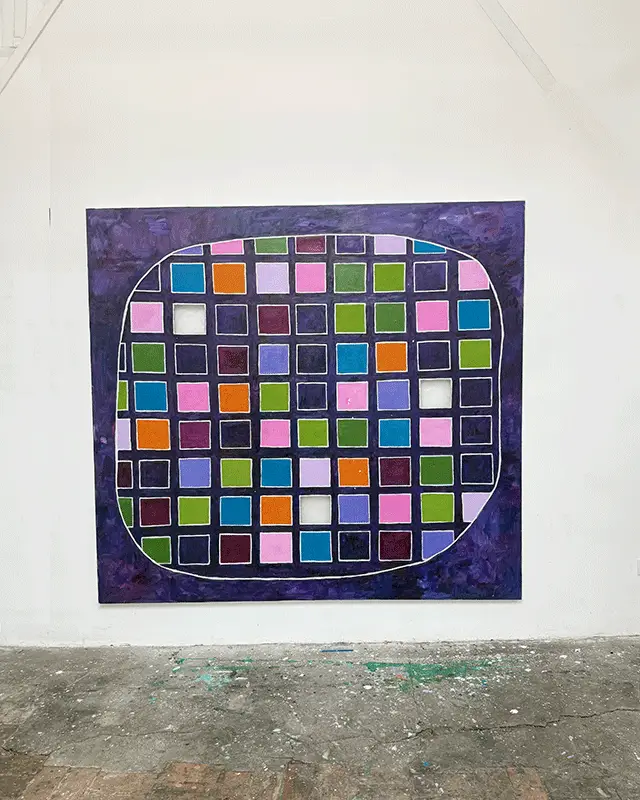
The grid is not a prison — it is a rhythm. I keep returning to this thought, because people often assume that
geometric abstraction is cold, controlled, intellectually remote.
But rhythm is the opposite of coldness. Rhythm is what the body knows before the mind catches up.
I think of John Cage, who wrote of music that opens the mind to the divine influences — and who understood
silence not as absence but as the most demanding presence of all.
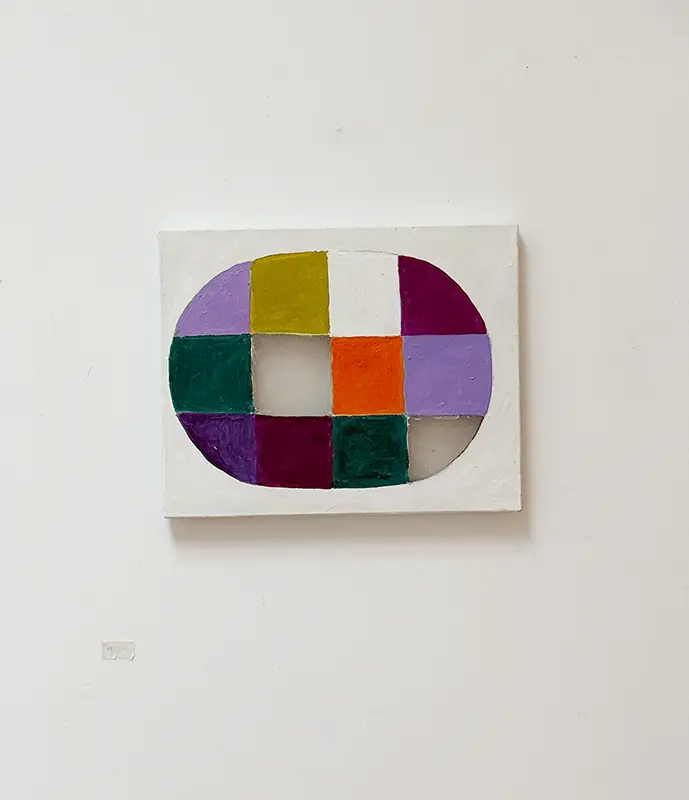
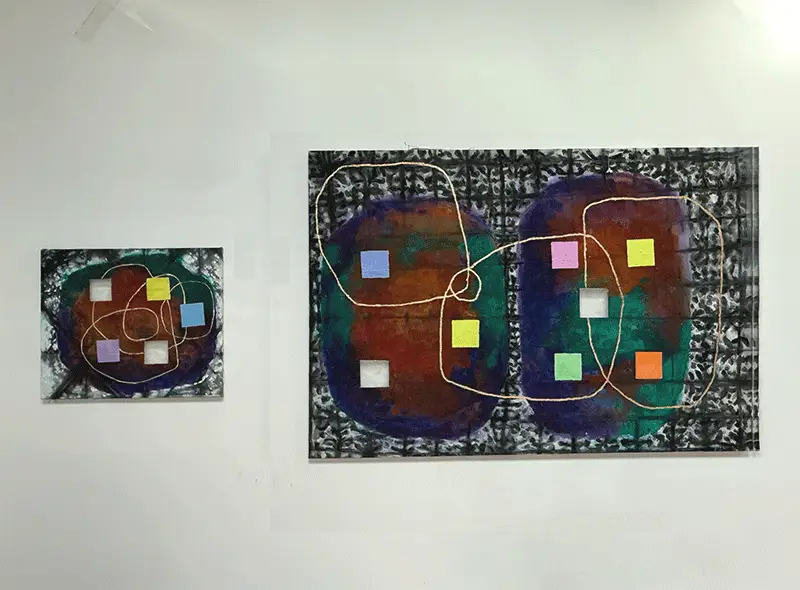
The holes in this painting are that silence.
When I place a hole in a painting, I am not removing something. I am adding a kind of gravity. The eye circles it,
returns to it, anchors itself around it.
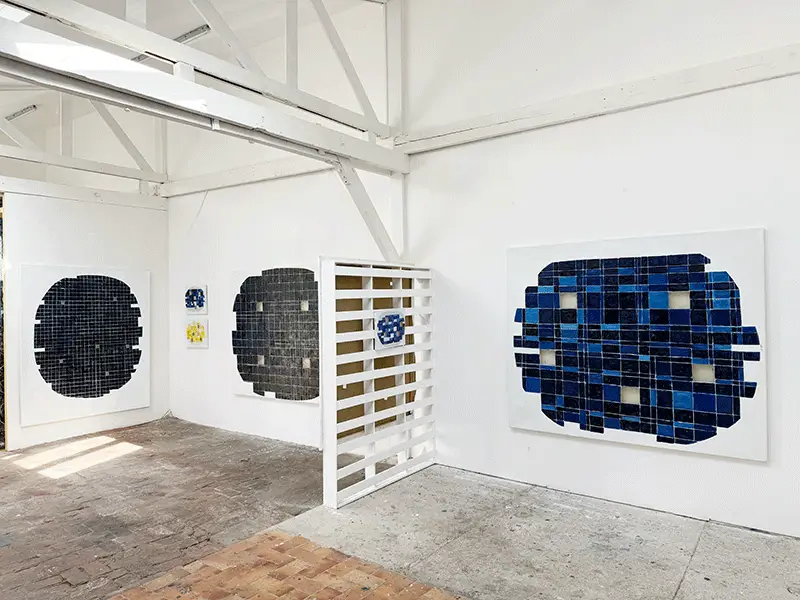
The painted surface becomes like gravel combed into subtle rhythms — raked, patient, precise. The emptiness
is not a failure of the painting. It is the painting’s deepest intention.
I found an echo of this in John Cage’s Stones — a piece made by simply placing stones in silence. He was not
filling space. He was framing attention.